Skip to content
Accredited Certification & Technical Training
Learning Academy Architecture

WorkForceRemote.org: Scaling Learning Systems

I architected and launched a comprehensive Learning Academy from the ground up, serving as the lead strategist for both site infrastructure and curriculum development.

Working with SMEs, I established a proprietary Remote Worker Certification ecosystem featuring distinct tracks for professionals, leaders, and organizations. I further expanded the academy into a state-certified technical training hub, providing mandatory CEUs and Licensing for security professionals in Access Control, Security Cameras, and General Security.

Project Implementation Skills

Instructional Design Strategy Curriculum Mapping & SME Collaboration
UI/UX Architecture Focus Mode & Learning UX Design
SME Content Strategy Knowledge Extraction & Technical Translation
LMS Administration System Configuration & Maintenance
H5P Engagement Interactive Technical Simulations
Digital Credentials Accredited Multi-System Integration
Online Course Development Proprietary Certification Build
xAPI Tracking User Experience & Iterative Data Decisions

Note: Due to the proprietary nature of this ecosystem, the following sections provide an authorized demonstration of the core architecture, focusing on the interface design and interactive mastery framework used throughout the curriculum.

Academy Launch Architecture

Comprehensive Course Homepage

The homepage establishes the structural foundation of the Academy, combining brand-aligned visual design with high-level curriculum organization.

The interface integrates custom brand colors and a professional hero header to immediately establish credibility for state-certified technical training.

Curriculum is organized into logical modules and specific lessons to ensure a clear learning path through complex safety and licensing protocols.

Automated progress tracking and a dedicated certificate download portal provide learners with instant validation of their 100% mastery.

Learning objectives, course instructions, and technical disclaimers are centralized to ensure all regulatory requirements are addressed.
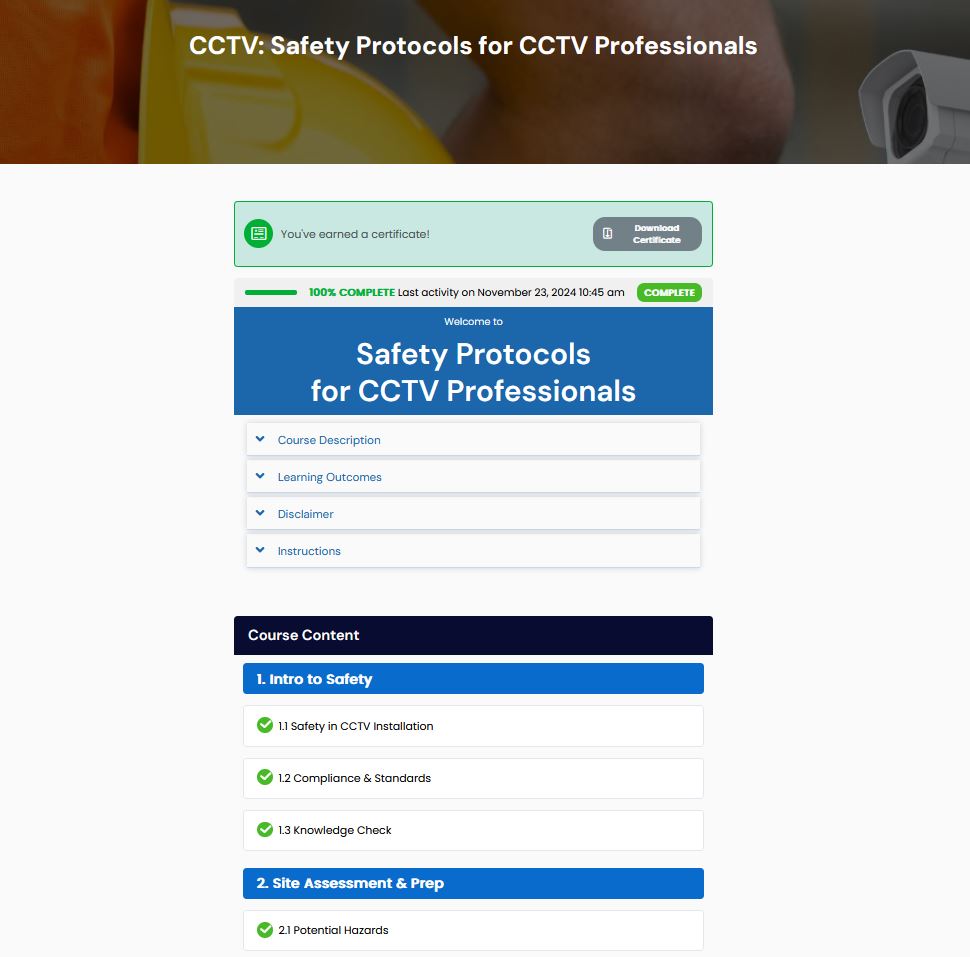
CCTV Safety Course Homepage
Click to Expand
Sample Course Landing Page & Certification Infrastructure
Technical Mastery & Engagement

Module & Lesson Architecture

The lesson layout is designed to sustain engagement through a multimodal approach, moving learners beyond passive reading into active skill application.

Strategic integration of interactive media, including H5P quizzes and technical video demonstrations, transforms theory into field-ready participation.

Accessible design principles ensure all learners can navigate complex content, from detailed safety equipment guides to interactive knowledge checks.

The "Explore & Complete" framework requires active mastery of the learning activity before the system permits progression to the next phase.

Gamified branching simulations, like the 'Remote Galactic Challenge,' teach perspective-taking by adapting the narrative to the learner's chosen character role.

Specific lessons include downloadable resources and job aids that act as immediate tools for real-world employment and field-side reference.

Demo: Interactive Ecosystem & Branching Decision Logic
Institutional Transformation
Institutional Case Study

Azusa Pacific University: School of Business Redesign

I led a comprehensive instructional redesign for the School of Business & Management, transforming a fragmented course environment into a professional, high-performance ecosystem.

Without a dedicated media department, I engineered a high-end experience by maximizing the native capabilities of the Canvas LMS and deep-linking a custom Google Workspace architecture. This project focused on creating a frictionless environment where adult learners could focus on technical mastery, supported by a scalable infrastructure that empowered faculty to deliver consistent, high-quality content.

📱
Responsiveness Mobile-First UI Design
📊
Outcomes SLO & Assessment Tracking
Accessible Universal Design Standards
LMS
Canvas Architecture

Utilized advanced HTML/CSS to bypass standard limitations for a responsive, branded feel.

GW
Google Workspace

Integrated Docs and Slides as "Live Resources" to ensure a single source of truth across all sections.

CV
Canva & Media

Developed custom visual assets and streamlined library permalink structures for zero-friction access.

MS
Office 365 & PPT

Converted static slide decks into interactive guided pathways for faculty and students.

UX/UI Redesign

Course Home Page Architecture

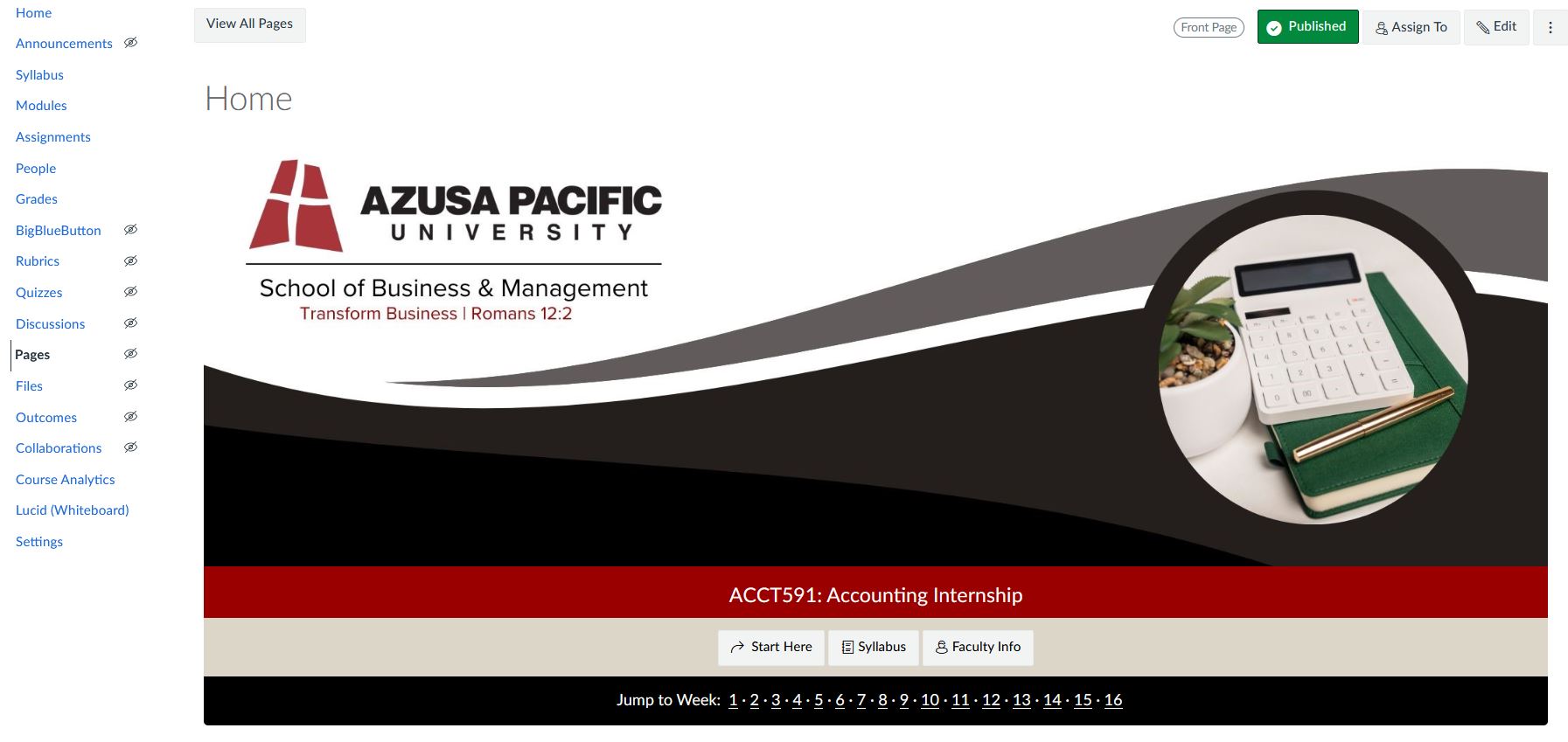
I led the redesign of the School of Business & Management course home pages to solve critical usability and accessibility gaps. The legacy system relied on fragile, non-responsive tables and manual icon placement that frequently "broke" during faculty updates. The final design—voted on and approved by School Chairs—utilizes a robust, accessible HTML framework that maintains visual integrity across all course sections while ensuring mobile responsiveness.
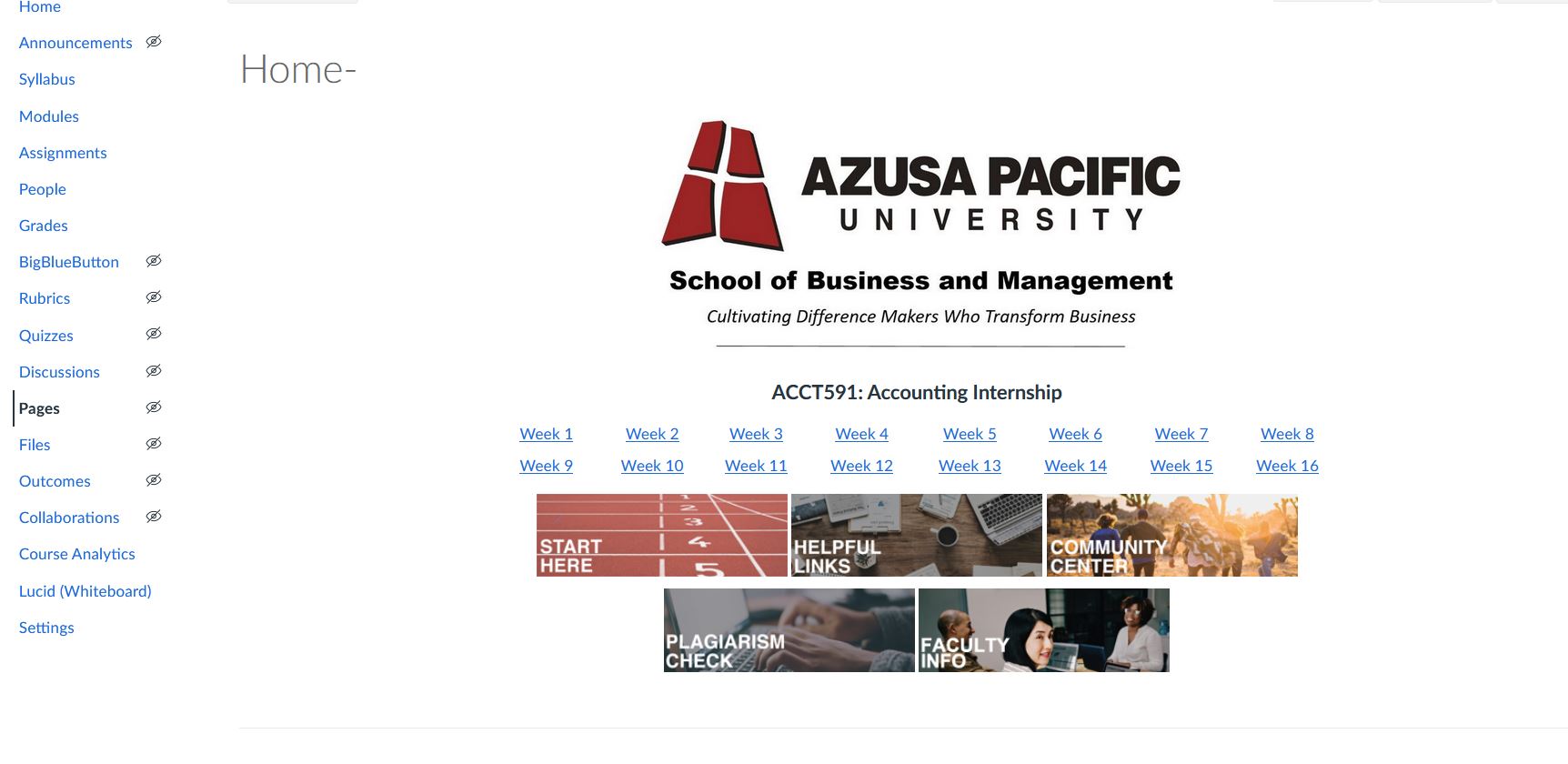
Legacy Fragile Layout
Legacy Home Page
View Legacy Issues
Chair-Approved Redesign
Redesigned Home Page
View Optimized Design
Instructional Design

Module Redesign: "Learn, Engage, Submit"

I reorganized the Canvas module flow into a high-clarity tripartite structure. By categorizing activities into Read, Engage, and Submit, I established a predictable cognitive pattern that reduces navigation fatigue and keeps students focused on their weekly learning objectives.
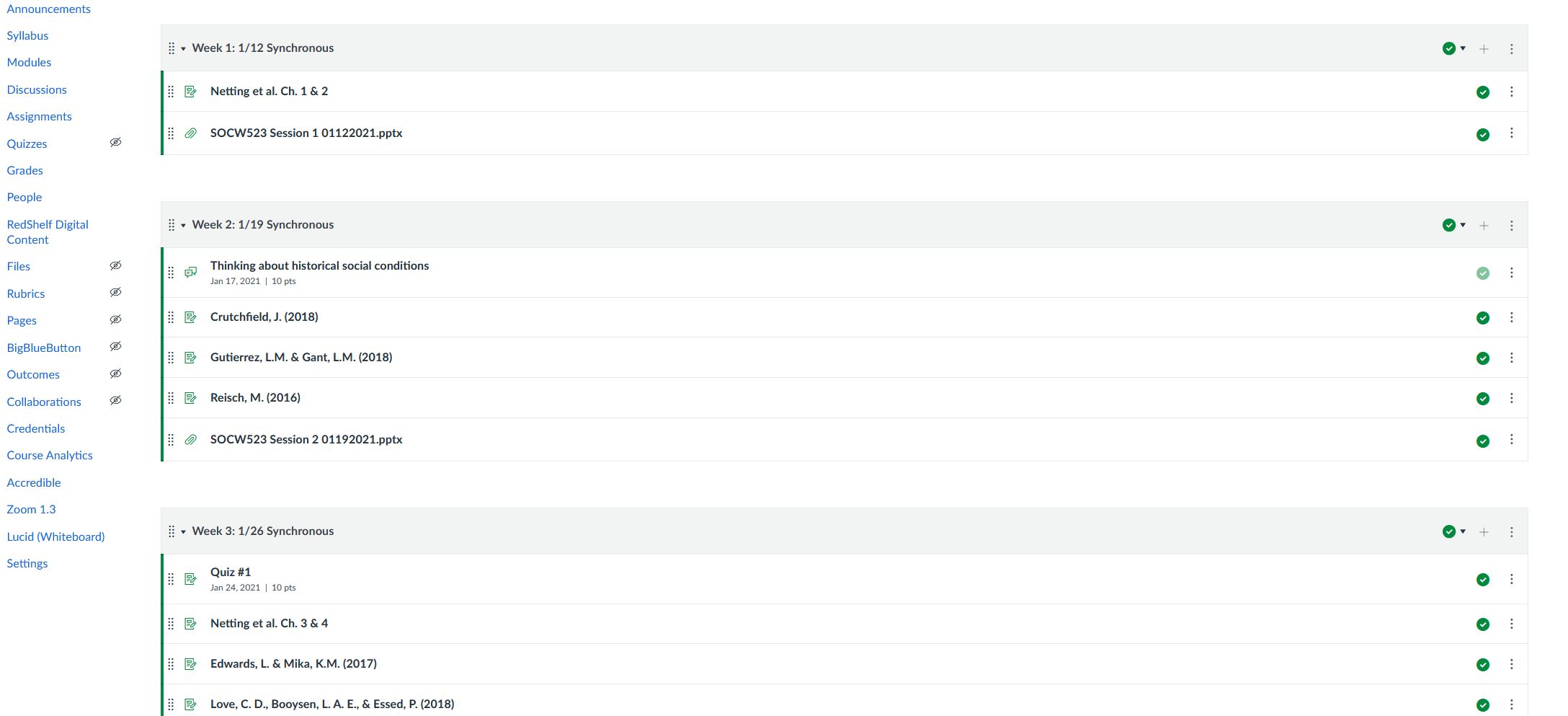
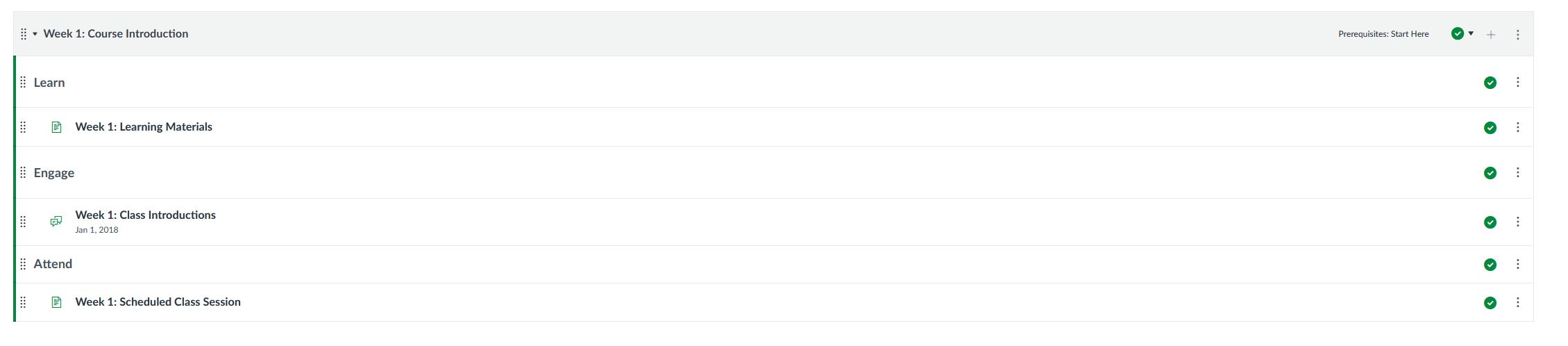
Original Fragmented Flow
Original Module
View Original
Structured Logic Flow
Redesigned Module
View Optimized
Workflow Efficiency

Dynamic Resource Ecosystem

To solve the challenge of maintaining outdated links across hundreds of course shells, I condensed over 20 pages of static Canvas content into a centralized Google Slide Ecosystem. Designed to operate at the department level, these "live" decks allow for real-time updates to be pushed across all development and live courses simultaneously.

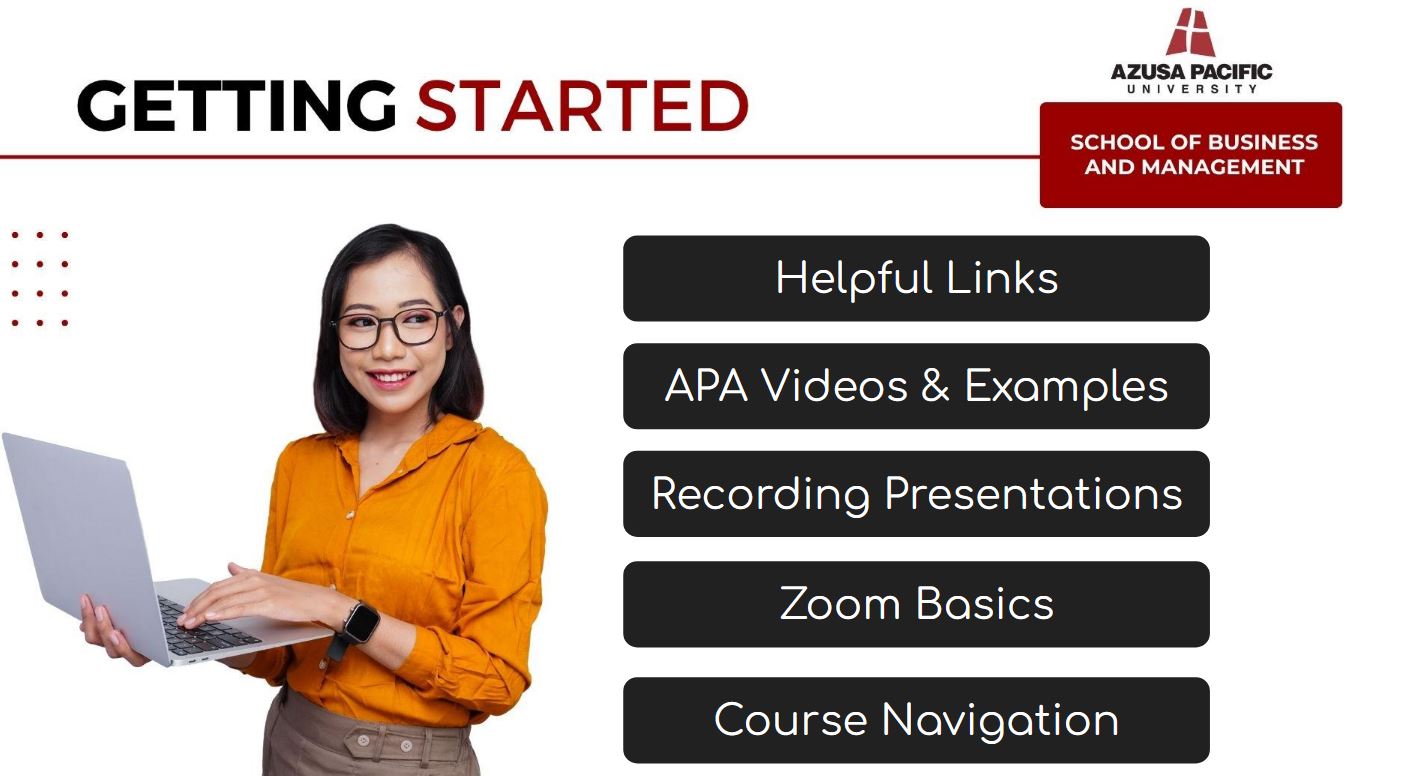
Instructor Resource
Click to Open Instructor PDF
Student Resource
Click to Open Student PDF
Page Templates

Stylized Content Delivery

I engineered a scalable template system for the School of Business to bridge the gap between legacy content and modern standards. These HTML layouts empower faculty to deploy professional, branded content that is fully responsive and meets strict accessibility requirements across all devices.
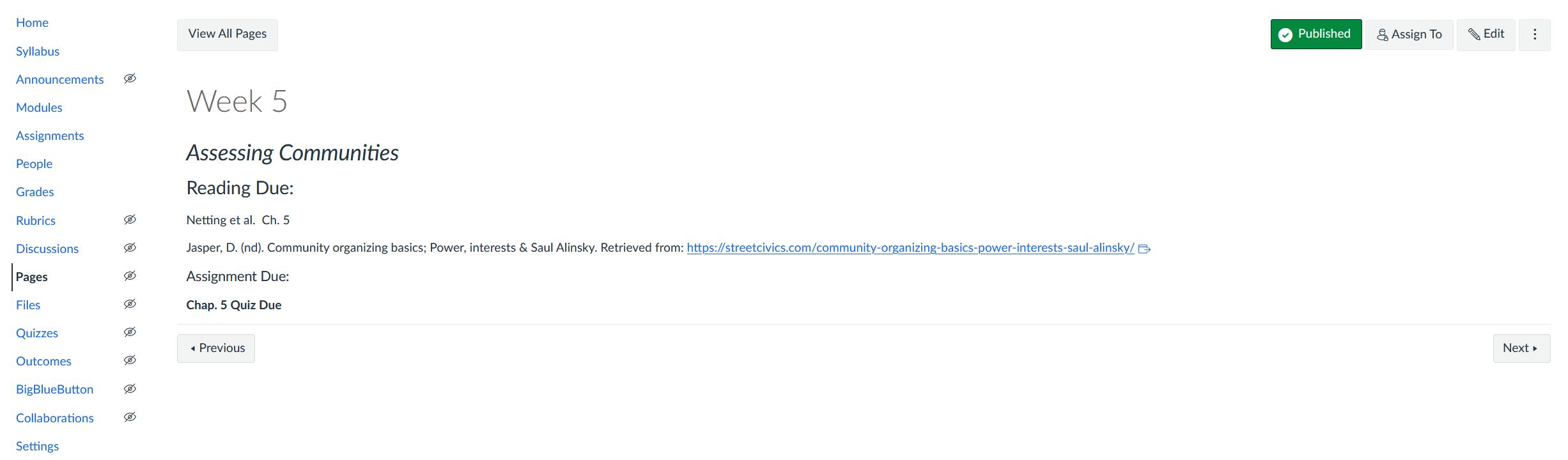
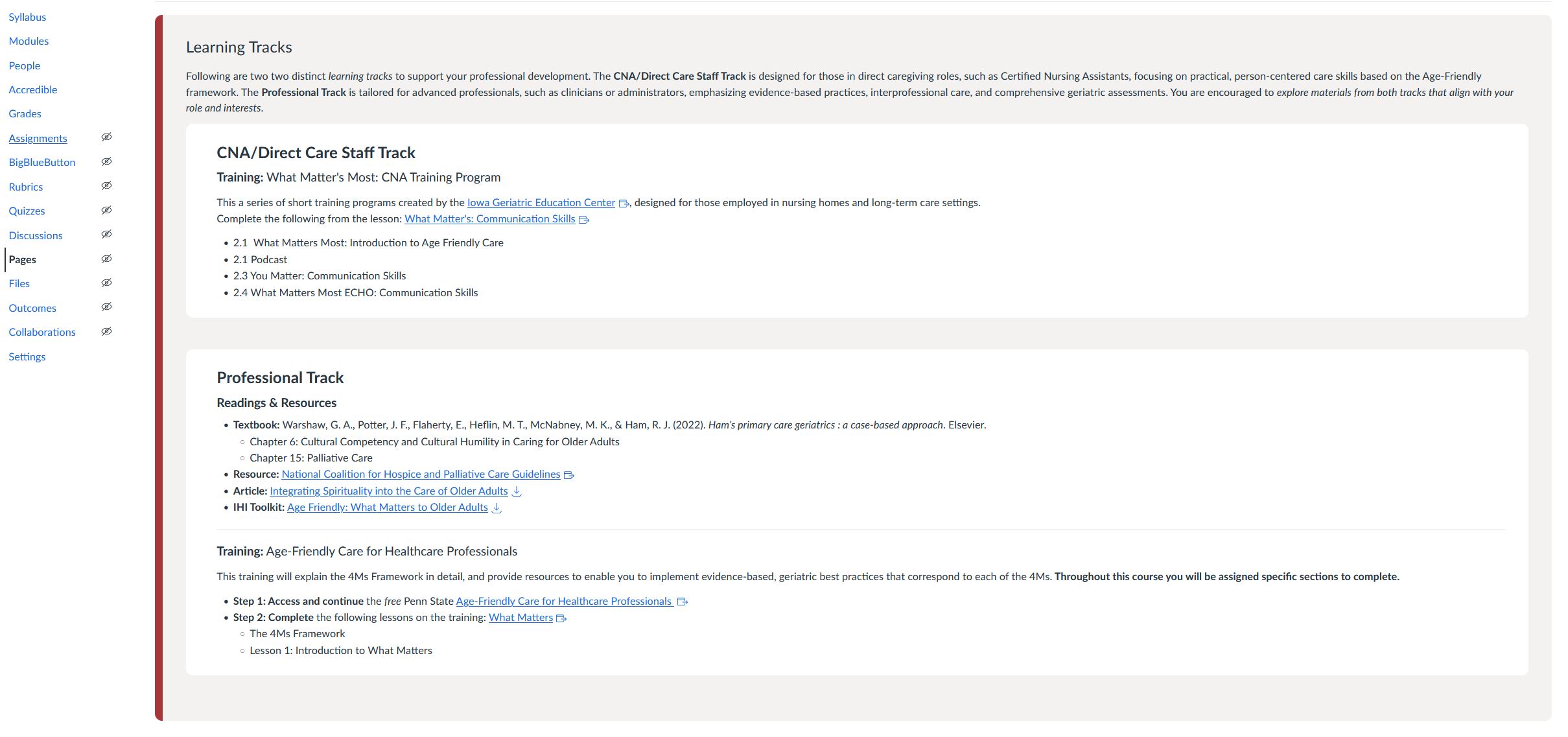
Static Legacy Page
Legacy Static Page
View Legacy Issues
Dynamic Accessible Template
Responsive Accessible Template
View Optimized
Assessment Architecture

Outcomes Assessment & SLO Alignment

I implemented a department-wide assessment strategy within the School of Business to bridge the gap between classroom grading and institutional reporting. By aligning interactive rubrics with Curriculum Committee CourseLeaf-approved Student Learning Outcomes (SLOs), I transformed the grading process into a streamlined data-gathering tool for institutional effectiveness.

Program Adoption Demo
Faculty Implementation
Instructional Design

Digital Learning & Design Hub

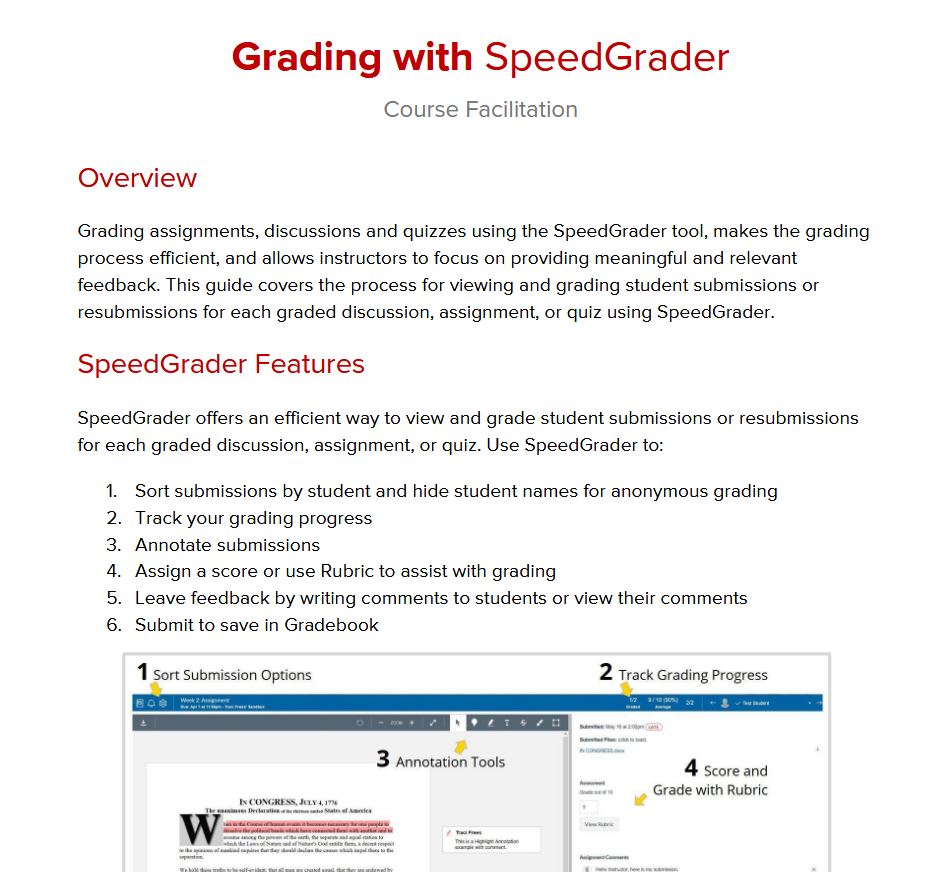
I developed the DPD Instructional Design Site as a centralized command center for the Azusa Pacific University design team. To respect project confidentiality while demonstrating technical proficiency, I am highlighting the two critical bookends of our workflow: the initial strategic alignment via the Design Doc and the final faculty facilitation guide for LMS grading.
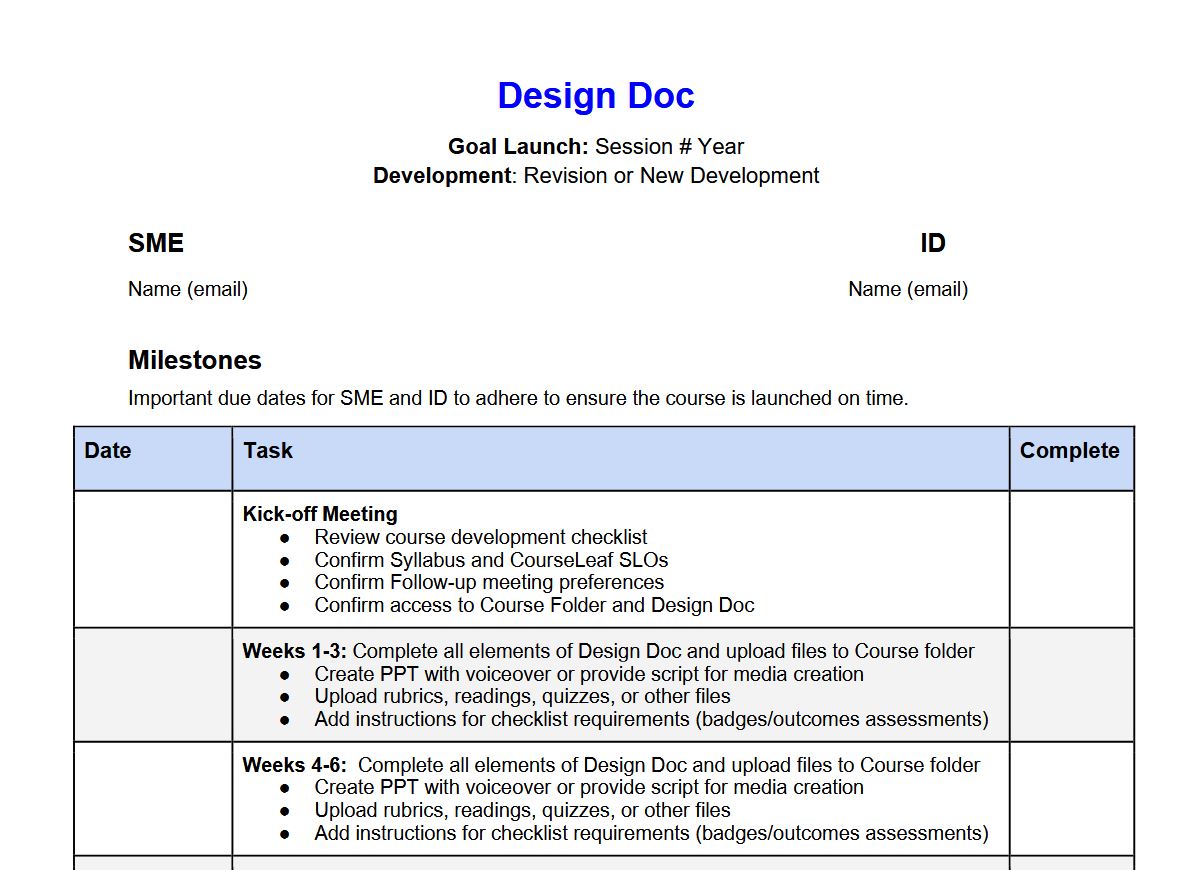
Design Document
Open Design Doc (PDF)
SpeedGrader Guide
Open Grading Guide (PDF)
Architecture Overview

LMS Strategic Comparison: Versatility in Design

A side-by-side analysis of how I adapt design frameworks to fit different organizational needs—from agile certifications to massive institutional scaling.

Design Factor WorkForceRemote.org (YellowHammer IT) Azusa Pacific University
Primary Ecosystem National and State Level Certifications & CEUs (Direct-to-Consumer) Regional Accreditation, FERPA Compliance & Institutional Scaling
Resource Constraint Lean budget: Engineering full-stack media solutions Enterprise scale: Deep-linking existing infrastructure
Compliance Focus SHRM & State Licensing Requirements WCAG 2.1 Accessibility & SLO Alignment
Technical Stack LearnDash LMS, WordPress, H5P, xAPI, Custom UI/UX Canvas LMS, Google Workspace, Canva, H5P, Proprietary Analytics
Workflow Strategy "Build & Pivot": Rapid iteration for market launch "Single Source of Truth": Centralized dynamic decks
Foundational Framework

Pedagogical Architecture & Learning Theory

My approach to instructional design is not merely about asset creation; it is rooted in established adult learning theories and systematic design models that ensure cognitive alignment and measurable outcomes.

01

Andragogy (Malcolm Knowles)

I build for the adult learner by prioritizing self-directedness and immediate relevancy. My designs acknowledge the learner's prior experience as a rich resource, ensuring that every module solves a "real-world" problem rather than just delivering abstract content.

02

Cognitive Load Theory

To prevent mental fatigue, I employ Scaffolding and Chunking. By managing intrinsic load and eliminating extraneous "noise" in the UI, I ensure the learner's working memory is dedicated entirely to mastering the complex technical skills required in the School of Business and IT environments.

03

Backward Design (Wiggins & McTighe)

Every build begins with the end in mind. I start by identifying the desired Student Learning Outcomes (SLOs), followed by determining acceptable evidence (assessments), and finally designing the instructional activities. This ensures 100% alignment between the curriculum and the institutional goals.

04

Systematic Iteration (ADDIE/SAM)

While I utilize the ADDIE model for thorough institutional projects, I adapt to SAM (Successive Approximation Model) for agile environments like WorkForceRemote. This flexibility allows for rapid prototyping and stakeholder feedback loops without sacrificing the integrity of the design.

🛡️
Compliance & Professional Standards

Institutional Confidentiality

While the artifacts above demonstrate the visual and structural foundation of the redesign, the full scope of this project included several advanced instructional design components. Due to strict institutional data privacy and proprietary agreements, the following elements are strictly omitted from this public portfolio.

Protected Strategic Components

  • Interactive H5P Learning Modules
  • Complex Branching Scenarios
  • Digital Credentials & Badge Metadata
  • Advanced xAPI Learner Analytics
  • Proprietary SME Intake Workflows
  • Internal Faculty Training Systems

In accordance with my commitment to institutional privacy protection, I am unable to fully share resources or full course design components or the internal mechanisms or data results associated with these components.