Skip to content
Strategy & Systems Architecture

Instructional Design Portfolio

This portfolio highlights samples I am allowed to share including UX/UI, instructional design, and organizational strategy. Every project showcased here is driven by a "Simplicity First" design philosophy, aimed at reducing cognitive load and administrative friction for the end-user.

From implementing university-wide workflow migrations at Azusa Pacific University to architecting the WorkForceRemote.org digital academy, these examples demonstrate a commitment to "Signal-Responsive" experience strategy and automated, intuitive interfaces.

Foundational Framework

Pedagogical Architecture & Learning Theory

+

My approach to instructional design is not merely about asset creation; it is rooted in established adult learning theories and systematic design models that ensure cognitive alignment and measurable outcomes.

01

Andragogy (Malcolm Knowles)

I build for the adult learner by prioritizing self-directedness and immediate relevancy. My designs acknowledge the learner's prior experience as a rich resource, ensuring that every module solves a "real-world" problem rather than just delivering abstract content.

02

Cognitive Load Theory

To prevent mental fatigue, I employ Scaffolding and Chunking. By managing intrinsic load and eliminating extraneous "noise" in the UI, I ensure the learner's working memory is dedicated entirely to mastering the complex technical skills required in the School of Business and IT environments.

03

Backward Design (Wiggins & McTighe)

Every build begins with the end in mind. I start by identifying the desired Student Learning Outcomes (SLOs), followed by determining acceptable evidence (assessments), and finally designing the instructional activities. This ensures 100% alignment between the curriculum and the institutional goals.

04

Systematic Iteration (ADDIE/SAM)

While I utilize the ADDIE model for thorough institutional projects, I adapt to SAM (Successive Approximation Model) for agile environments like WorkForceRemote. This flexibility allows for rapid prototyping and stakeholder feedback loops without sacrificing the integrity of the design.

Decision Making Model

Fun with Riddles: Anything is Possible Tree

+

When a stakeholder says, "We need something that does this," they are presenting a riddle. This 4-step process captures their vision and proves that with the right approach, anything is possible.

01

The Puzzle

I isolate the true problem hidden inside the request. By listening for intent rather than just technical requirements, I translate the stakeholder's vague "riddle" into a clear, logical plan before building begins.

02

The Identity

I give the idea a name and a visual soul immediately. Branding the vision serves as a psychological anchor, turning a theoretical "nothing" into a tangible project that stakeholders can finally see and support.

03

The Build

I iterate in the open, bringing the stakeholder into the development loop to see the solution grow. This real-time progress uses their feedback as signals to pivot, proving that their vision is achievable.

04

The Polish

I strip away every piece of administrative friction and "data fog" until only the most intuitive interface remains. This ensures the final result is simple, fast, and exactly what the stakeholder actually needed.

Professional Creed

Motivation & Core Values

+

My work is driven by a commitment to excellence and a belief in the transformative power of education. I thrive in environments that value hard work and the shared pursuit of meaningful impact.

01

Courage

I am willing to step into the unknown. Whether it's a technical "riddle" or a complex institutional shift, I have the confidence to figure it out and drive the project toward a successful outcome.

02

Transparency & Integrity

I believe in honest collaboration. By maintaining clear communication and high ethical standards, I ensure that stakeholders and teams are always aligned and that the work produced is of the highest caliber.

03

Respect & Teamwork

Great results are born from mutual respect. I value the unique expertise every team member brings to the table and strive to build instructional environments where every voice is heard and every learner can succeed.

04

Practical Excellence

Following the belief that "anything is possible," I dedicate myself to the hard work required to turn visions into reality. I don't just build content; I build systems that work for real people in the real world.

Design Challenge Presentation

Fire Safety: Decision-Making & Readiness

This microlearning module shifts the focus from passive observation to active engagement, requiring learners to respond to environmental signals to ensure life-saving outcomes.

01

Critical Decision Logic

Instead of rote memorization, learners must assess fire dynamics in real-time to determine the safest and most effective course of action.

02

Strategic Locating

The module prioritizes spatial awareness, ensuring learners can rapidly identify and access fire extinguishers within their specific facility.

Azusa Pacific University Portfolio Highlight

Instructional Design Training & Systems Architecture

The following case study and training examples demonstrate the governance and technical frameworks I developed for the Instructional Design team at Azusa Pacific University. These assets showcase the transition from manual tracking to scalable, automated project management.

Course Development Tracking

Ensuring Transparency, Quality, and Accountability

Establishing Transparency

To bridge the gap before a formal PM tool was adopted, I architected a custom Google Sheets dashboard. This provided Deans and Chairs real-time visibility into course statuses, closing the communication gap between faculty and the ID team.

Scaling for Growth

Once the workflow was proven and consistent, I led the transition into Asana. This move automated handshakes and ensured our "Zero-Miss-Launch" governance was strictly enforced across all departmental course builds.

Phase 1: Implementation

Google Sheets Tracker Demo

This training video was developed for Instructional Designers to standardize data entry and ensure the dashboard remained an accurate "single source of truth" for university stakeholders.

Phase 2: Modernization

Asana Migration & Adoption

This demo highlights the final evolution of the tracker, demonstrating how the established processes were migrated into Asana to increase automation and project velocity.

WCAG 2.1 AA Standards

The 7 Pillars of Accessibility

I established the 7 Pillars of Accessibility framework to audit and align digital course catalogs with WCAG 2.1 AA standards. This strategic initiative focuses on reducing cognitive load and removing "Data Fog" to ensure a seamless learning experience for all students.

Pillar 1: Headings

Logical Structure

Organize content like an outline so assistive technology can scan pages efficiently.

<h1>Course Title</h1>
 <h2>Module 1</h2>
  <h3>Lesson A</h3>
Pillar 2: Lists

Standard Formatting

Use built-in list tools rather than manual spacing for screen reader compatibility.

<ul>
 <li>First Item</li>
 <li>Second Item</li>
</ul>
Pillar 3: Links

Descriptive Text

Link text must explicitly describe the destination; avoid "Click Here".

<a href="...">
 Download Syllabus PDF
</a>
Pillar 4: Alt Tags

Visual Descriptions

Provide concise written descriptions for all non-text content.

<img src="..."
 alt="Quarterly revenue chart">
Pillar 5: Tables

Data Integrity

Use tables strictly for data sets, never for page layout or formatting.

<table>
 <th>Student ID</th>
 <td>00456</td>
</table>
Pillar 6: Color

Contrast & Meaning

Maintain high contrast and never use color as the only way to convey meaning.

Required: Submit by 5pm.
Pillar 7: Video & Media

Closed Captions & Transcripts

Audio and video must be accompanied by accurate captioning. Best practices require a 99% accuracy rate for all course media.

00:01:15 → 00:01:20
[Instructor]: "Welcome to Lesson 1."

Implementation Resources

DOCX

Standards Framework Draft

Baseline Accessibility Guide

Download
Case 1: Azusa Pacific University

Modernizing the Academic Ecosystem

Institutional Change Management

School of Business Course Redesign

I led a comprehensive scalability initiative for the School of Business and Management, engineered to bridge the gap between legacy content and modern digital standards. This project ensured that academic rigor was matched by a seamless, intuitive user interface.

This was a three-month high-touch change management initiative. I facilitated a rigorous alignment process with Deans and Department Chairs, conducting at least 15 iterations for every core course component—including the student dashboard, individual course pages, and outcome assessment frameworks. This iterative collaboration was vital to getting all department heads to align on a single, high-quality institutional standard.

Stakeholder Alignment

Navigated complex change management by securing buy-in from academic leadership. This unified approach ensured that departmental standards remained consistent across the entire LMS environment.

Iterative Precision

Every element, from the Dashboard UX to learning outcome mapping, underwent 15+ rounds of feedback to reduce cognitive load and administrative friction for faculty and students.

LMS Interface Walkthrough

The following video provides a walkthrough of the updated Canvas interface, showcasing the specific UX enhancements and global navigation changes finalized for the School of Business.

UX/UI Redesign

Course Home Page Architecture

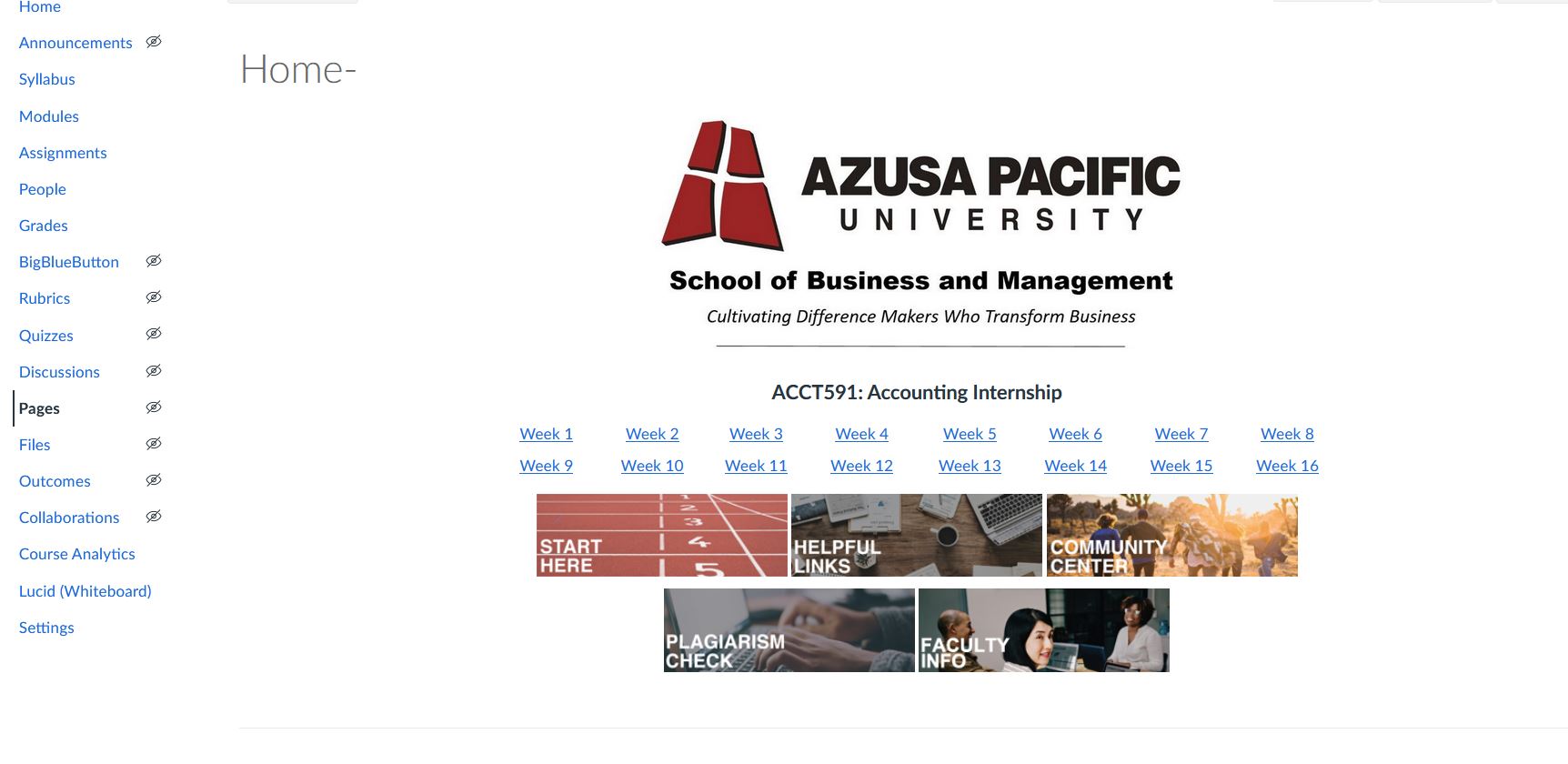
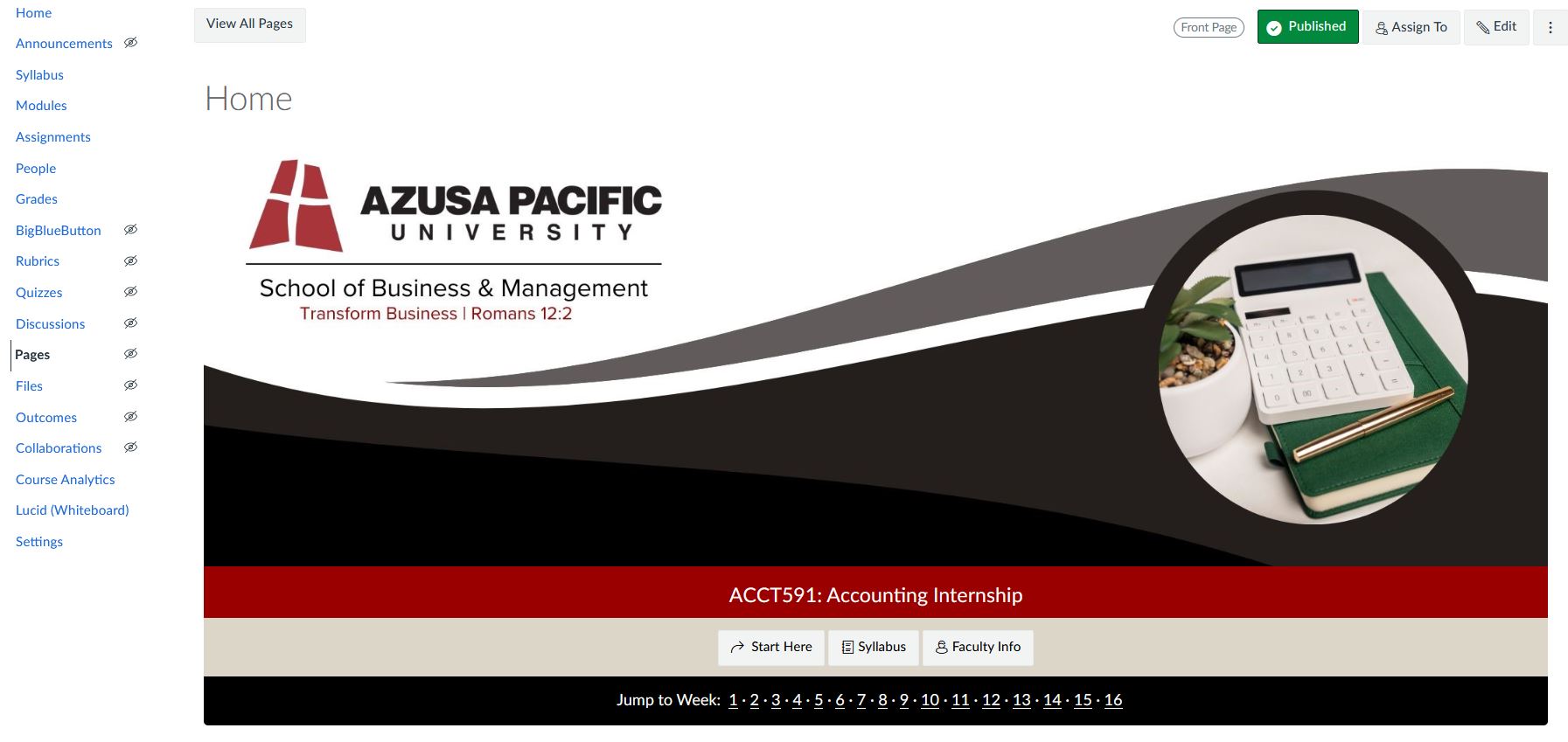
I led the redesign of the School of Business & Management course home pages to solve critical usability and accessibility gaps. The legacy system relied on fragile, non-responsive tables and manual icon placement that frequently "broke" during faculty updates. The final design—voted on and approved by School Chairs—utilizes a robust, accessible HTML framework that maintains visual integrity across all course sections while ensuring mobile responsiveness.

Legacy Fragile Layout
Legacy Home Page
View Legacy Issues
Chair-Approved Redesign
Redesigned Home Page
View Optimized Design
Instructional Headers

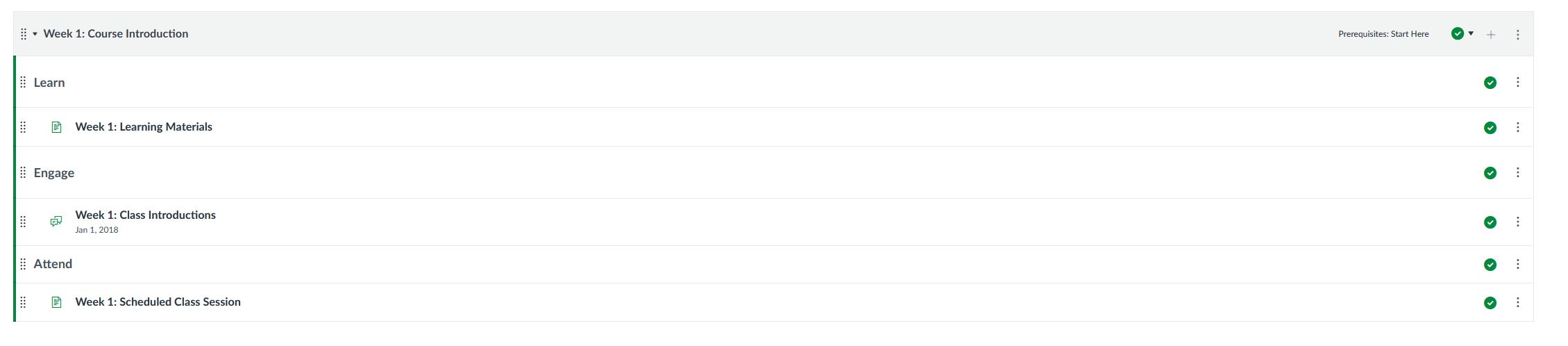
Module Redesign: "Learn, Engage, Submit"

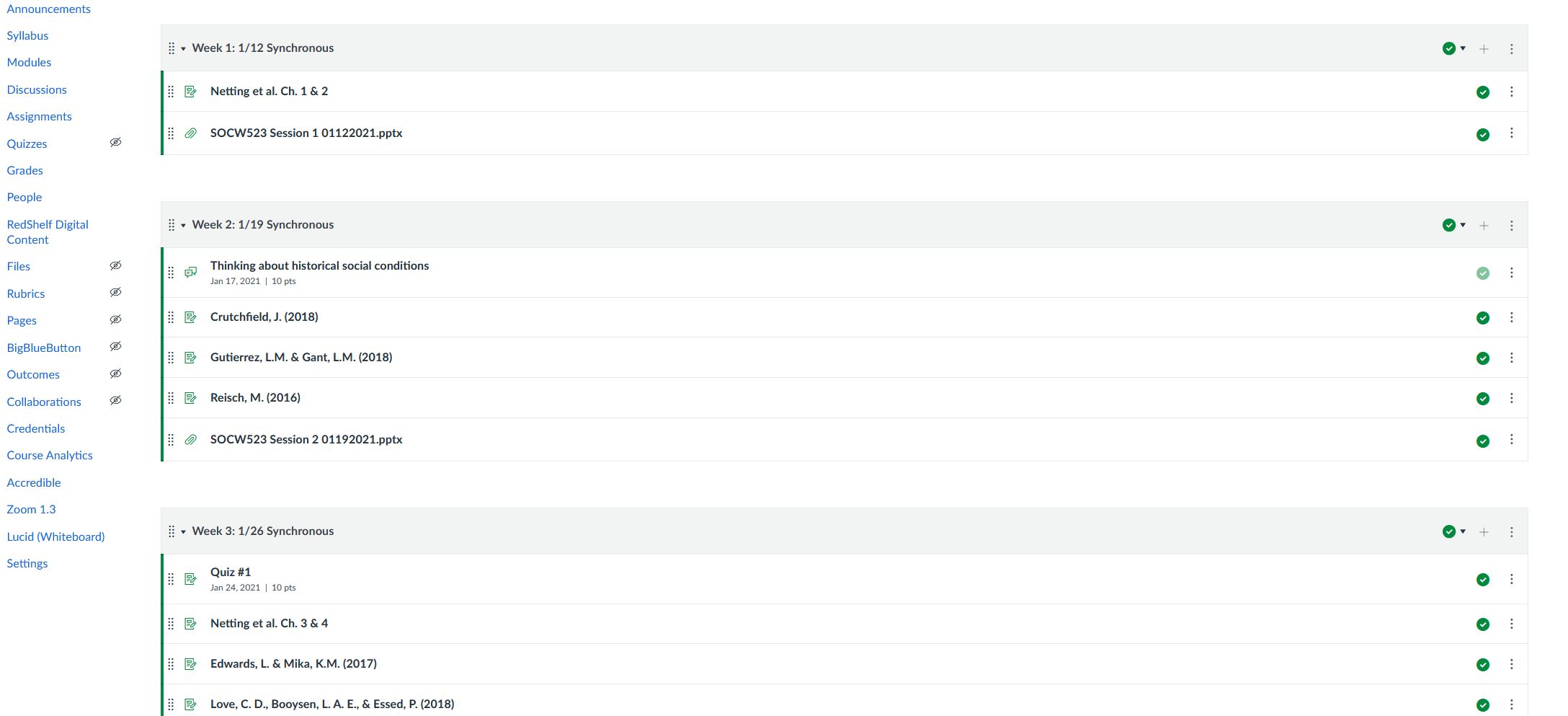
I reorganized the Canvas module flow into a high-clarity tripartite structure. By categorizing activities into Read, Engage, and Submit, I established a predictable cognitive pattern that reduces navigation fatigue and keeps students focused on their weekly learning objectives.

Original Fragmented Flow
Original Module
View Original
Structured Logic Flow
Redesigned Module
View Optimized
Workflow Efficiency

Dynamic Resource Ecosystem

To solve the challenge of maintaining outdated links across hundreds of course shells, I condensed over 20 pages of static Canvas content into a centralized Google Slide Ecosystem. Designed to operate at the department level, these "live" decks allow for real-time updates to be pushed across all development and live courses simultaneously.

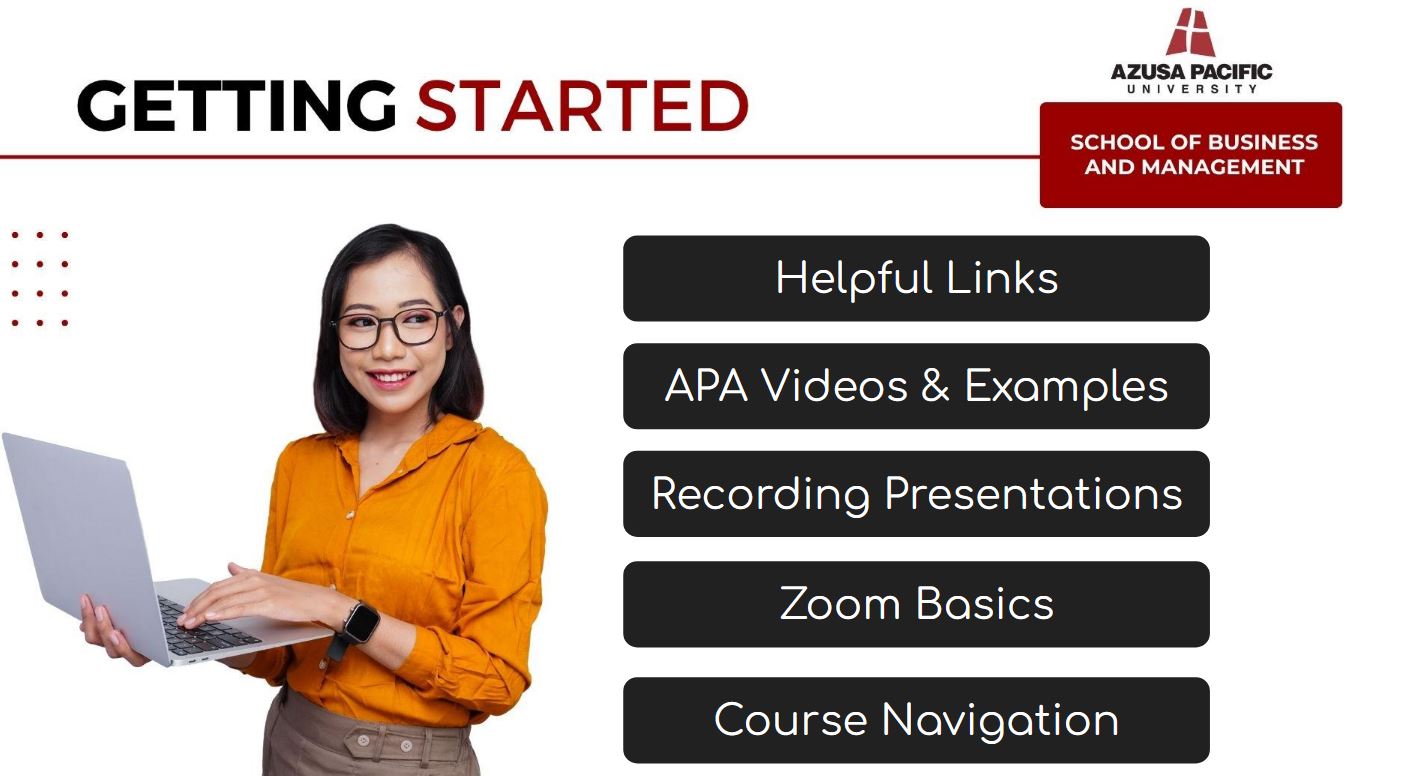
Instructor Resource
Click to Open Instructor PDF
Student Resource
Click to Open Student PDF
Page Templates

Stylized Content Delivery

I engineered a scalable template system for the School of Business to bridge the gap between legacy content and modern standards. These HTML layouts empower faculty to deploy professional, branded content that is fully responsive and meets strict accessibility requirements across all devices.

Static Legacy Page
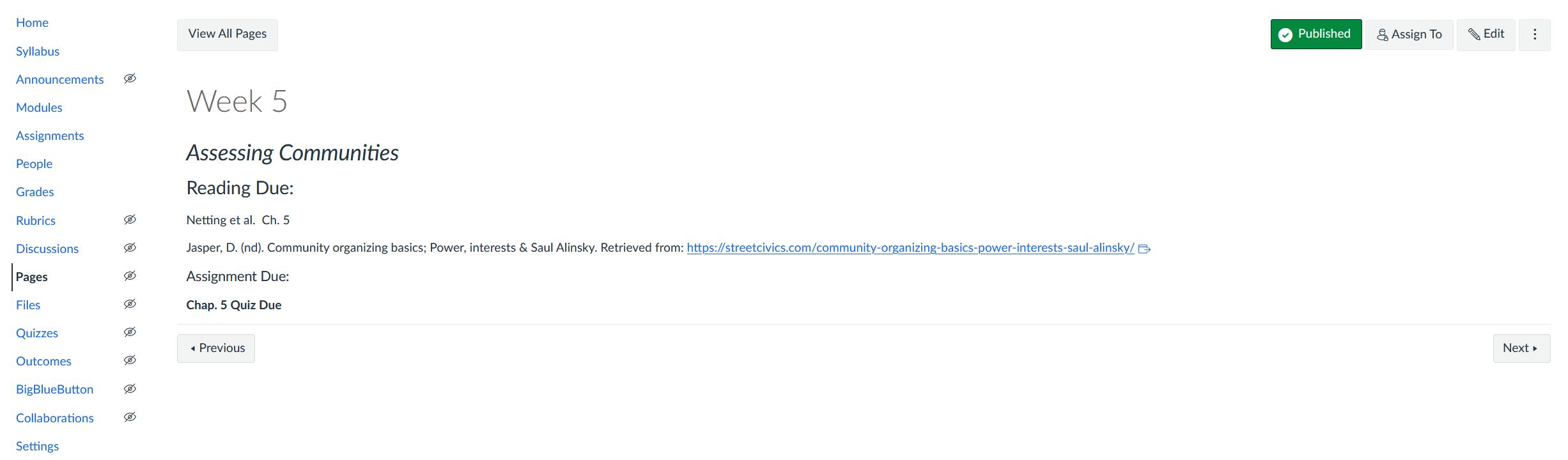
Legacy Static Page
View Legacy Issues
Dynamic Accessible Template
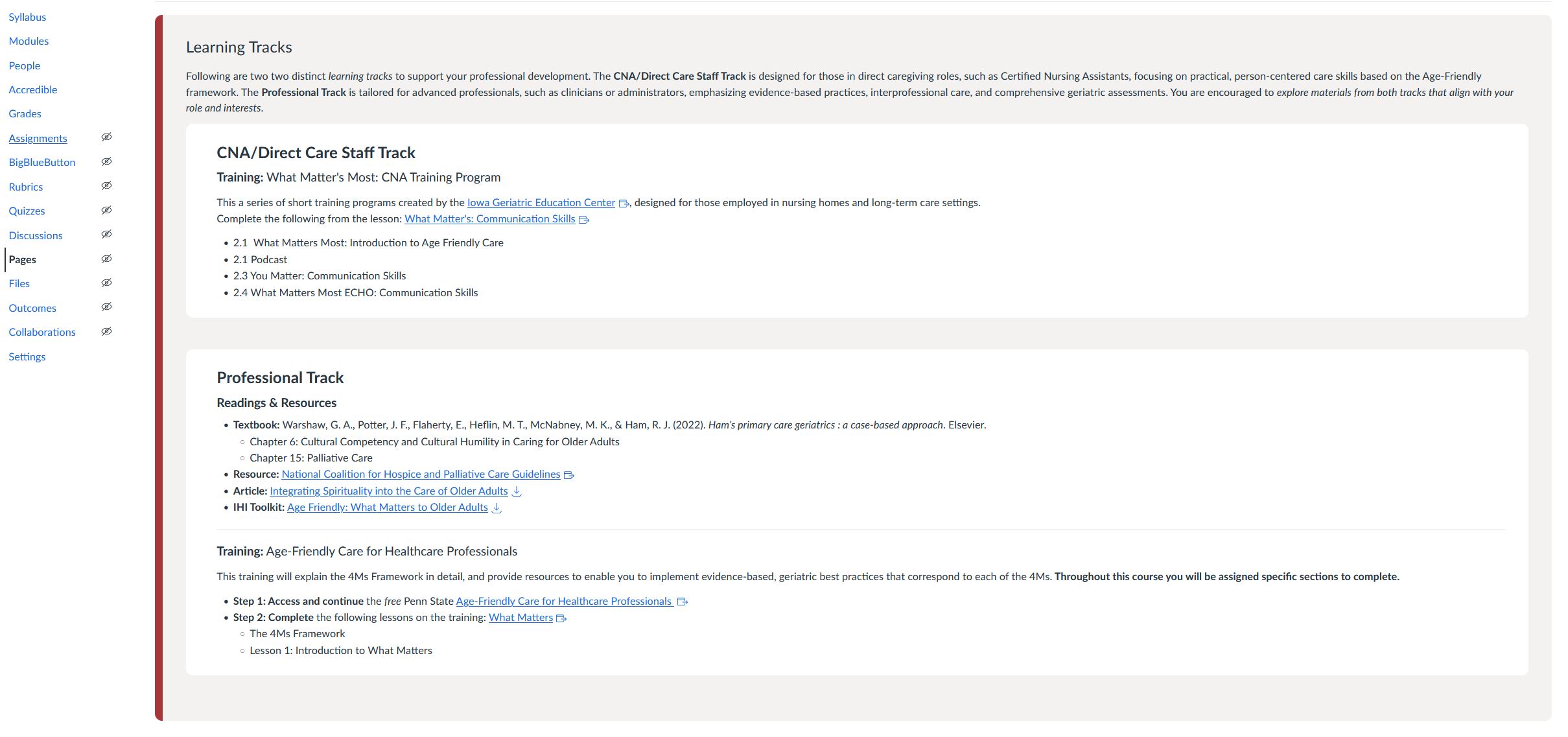
Responsive Accessible Template
View Optimized
Assessment Architecture

Outcomes Assessment & SLO Alignment

I implemented a department-wide assessment strategy within the School of Business to bridge the gap between classroom grading and institutional reporting. By aligning interactive rubrics with Curriculum Committee CourseLeaf-approved Student Learning Outcomes (SLOs), I transformed the grading process into a streamlined data-gathering tool for institutional effectiveness.

Program Adoption Demo
Faculty Implementation
Working with SMEs & facilitationculty

Digital Learning & Design Resources

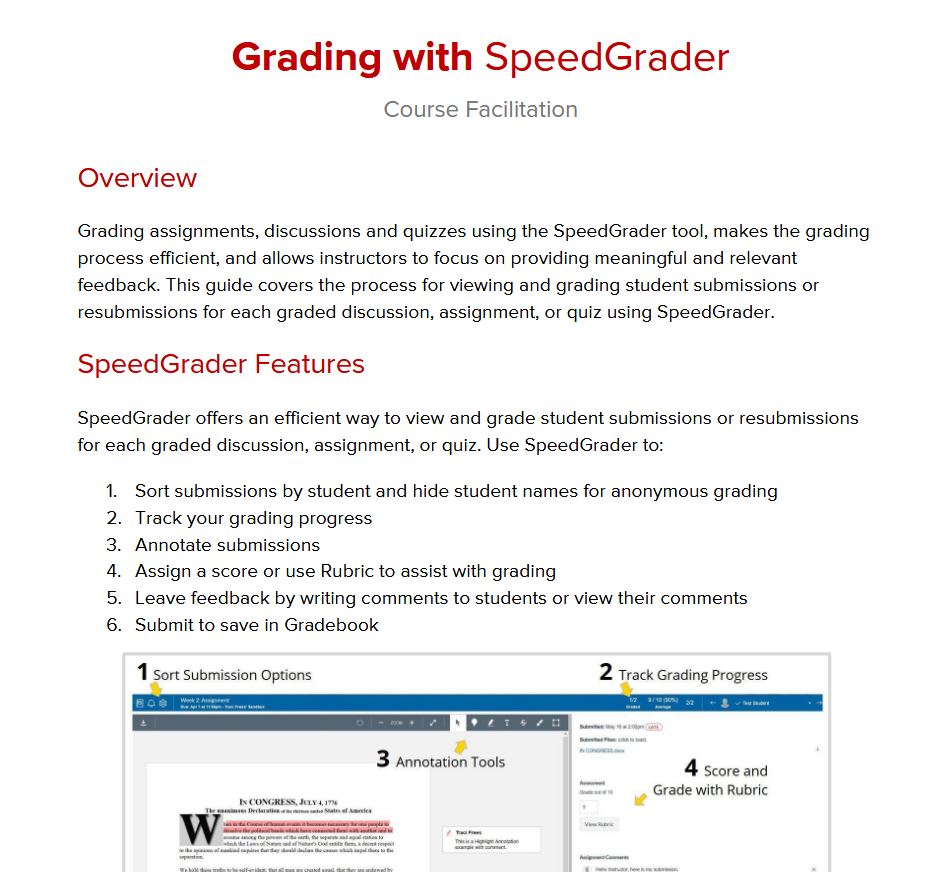
I developed the DPD Instructional Design Site as a centralized command center for the Azusa Pacific University design team. To respect project confidentiality while demonstrating technical proficiency, I am highlighting the two critical bookends of our workflow: the initial strategic alignment via the Design Doc and the final faculty facilitation guide for LMS grading.
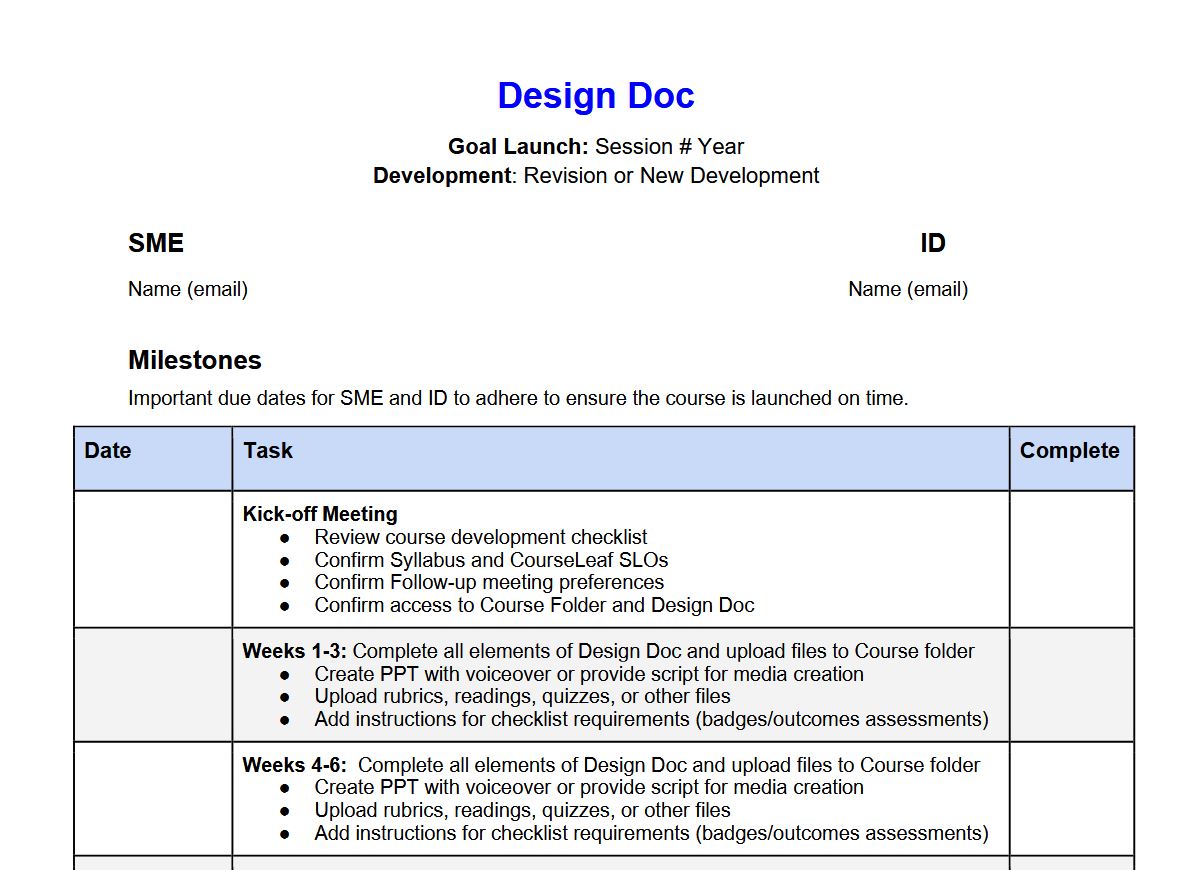
Design Document
Open Design Doc (PDF)
SpeedGrader Guide
Open Grading Guide (PDF)
Modern Learning Tech

Working with Artificial Intelligence (AI)

I utilize natural language and AI orchestration to architect scalable learning solutions, moving beyond traditional authoring to rapid, high-fidelity production.

Client Inquiry

Wrapbook & WorkForceRemote.org

The Question: "How can we use AI to enhance our onboarding and compliance training at our company?"

In response to inquiries from organizations like Wrapbook, I develop workflows that integrate AI-generated personas with professional post-production to create engaging, human-centric training at scale.

Production Stack

Beyond the Prompt

While HeyGen provides the AI persona and voiceover, I utilize Camtasia for precision editing and layered background music to ensure the final product meets professional brand standards.

View AI Persona & Voiceover Demo (HeyGen + Camtasia)
+

This demo showcases the integration of AI-generated assets with professional editing to address complex
corporate onboarding and compliance training needs.

Azusa Pacific University → AI Prototype

Interprofessional Case Study Maria Gonzalez (AI Avatar)

This prototype solved the primary challenge of providing a consistent, high-fidelity simulation patient to help students master diagnostic questioning. By moving away from static role-play, students practice real-time interaction to identify medical and social variables in a safe environment.

Impact, Efficiency & Success Metrics
Operational Efficiency

This model saved faculty approximately 3 hours per student, per week, over the 8-week course. Students can log in at any time to complete assignments, eliminating the logistical burden of scheduled labs.

Feedback and Success

While initial benchmarks were set for a 60% positive rating, the pilot achieved a 98% positive rating from both students and faculty, citing high engagement and diagnostic realism.

Interactivity Metrics

Data revealed an unexpected outcome in engagement timing: the highest volume of student-patient interactions occurred between 6:00 PM and 11:00 PM. This shift highlights how the AI model successfully accommodates non-traditional student schedules that fall outside of standard clinical hours.

AI Avatar Simulation with Patient Info

Demographics and Background

Patient

Maria Gonzalez, 72 years old

Heritage

Hispanic/Latina (Mexican-American) with cultural influences of familismo and Catholic faith

Setting

Assisted living facility in Los Angeles County with basic nursing oversight and meals

Financials

$1,500 monthly income (Social Security/Pension); Medi-Cal beneficiary with share-of-cost requirements

Medical History (NP Focus)

Chronic

Type 2 diabetes (A1C 8.5%), Hypertension (148/92 mmHg), Osteoarthritis, and Cognitive Impairment (MMSE 24/30)

Recent Event

Fall while reaching for a family photo resulting in a bruised hip and reduced mobility

Symptoms

Pain (5/10), fatigue, 8 lb weight loss in 3 months, and sleep disturbances

Medications

Metformin, lisinopril, ibuprofen (as needed), and multivitamins

Psychosocial Family Dynamics and Faith Integration

Social and SW Focus

Environment

Lives alone in a one-bedroom unit; limited English proficiency with a preference for Spanish

Grief

Widowed 5 years; struggling with unresolved grief and existential questions

Family Dynamics

Eldest son (overworked), Daughter (out-of-state), Youngest son (substance use disorder)

Tasks

Conduct biopsychosocial assessment and assist with complex CalFresh and IHSS applications

Faith and Complications

Spiritual

Questions suffering as divine punishment; seeks prayer but lacks a consistent spiritual advisor

Conflict

Family disagreement over care for the youngest son and Maria's potential relocation

Values

Integration of Christian principles (e.g., Psalm 23) and FICA tools into the long-term care plan

Learning Objectives & Requirements

Primary Objectives

  • Learn how NP and SW roles intersect in managing medical, social, spiritual, and financial issues
  • Address needs collaboratively across professional boundaries
  • Incorporate Hispanic cultural elements and navigate Medi-Cal/CalFresh constraints
  • Apply Christian principles and values to promote hope and dignity

Assignment Instructions (brief)

Students interact with the avatar for 20-30 minutes followed by 1+ hours of collaboration. The Week 15 presentation requires a 10-15 slide PowerPoint and 3 peer-reviewed APA references.

Accredited Certification & Technical Training
Learning Academy Architecture

WorkForceRemote.org: Scaling Learning Systems

I architected and launched a comprehensive Learning Academy from the ground up, serving as the lead strategist for both site infrastructure and curriculum development.

Working with SMEs, I established a proprietary Remote Worker Certification ecosystem featuring distinct tracks for professionals, leaders, and organizations. I further expanded the academy into a state-certified technical training hub, providing mandatory CEUs and Licensing for security professionals in Access Control, Security Cameras, and General Security.

Project Implementation Skills

Instructional Design Strategy Curriculum Mapping & SME Collaboration
UI/UX Architecture Focus Mode & Learning UX Design
SME Content Strategy Knowledge Extraction & Technical Translation
LMS Administration System Configuration & Maintenance
H5P Engagement Interactive Technical Simulations
Digital Credentials Accredited Multi-System Integration
Online Course Development Proprietary Certification Build
xAPI Tracking User Experience & Iterative Data Decisions

Note: Due to the proprietary nature of this ecosystem, the following sections provide an authorized demonstration of the core architecture, focusing on the interface design and interactive mastery framework used throughout the curriculum.

Case 2: WorkForceRemote.org ~ Academy Launch Architecture

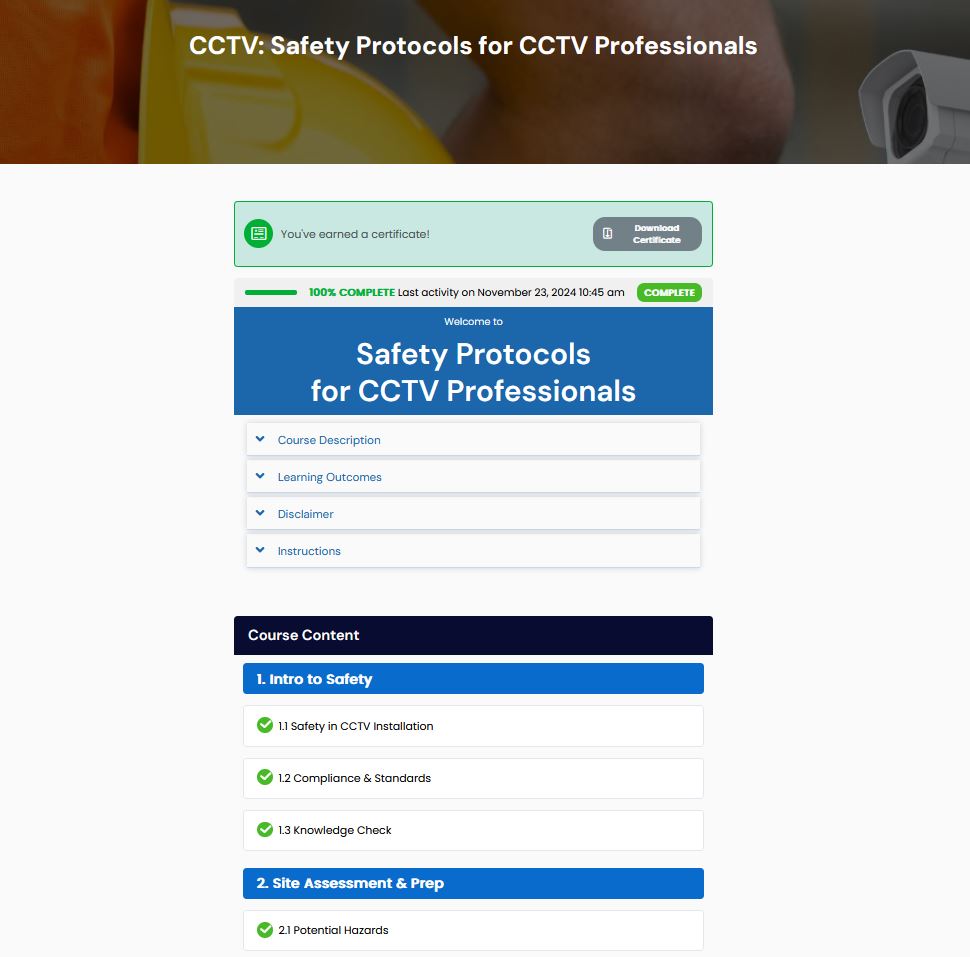
Comprehensive Course Homepage

The homepage establishes the structural foundation of the Academy, combining brand-aligned visual design with high-level curriculum organization.

The interface integrates custom brand colors and a professional hero header to immediately establish credibility for state-certified technical training.

Curriculum is organized into logical modules and specific lessons to ensure a clear learning path through complex safety and licensing protocols.

Automated progress tracking and a dedicated certificate download portal provide learners with instant validation of their 100% mastery.

Learning objectives, course instructions, and technical disclaimers are centralized to ensure all regulatory requirements are addressed.
CCTV Safety Course Homepage
Click to Expand
Sample Course Landing Page & Certification Infrastructure
Technical Mastery & Engagement

Module & Lesson Architecture

The lesson layout is designed to sustain engagement through a multimodal approach, moving learners beyond passive reading into active skill application.

Strategic integration of interactive media, including H5P quizzes and technical video demonstrations, transforms theory into field-ready participation.

Accessible design principles ensure all learners can navigate complex content, from detailed safety equipment guides to interactive knowledge checks.

The "Explore & Complete" framework requires active mastery of the learning activity before the system permits progression to the next phase.

Gamified branching simulations, like the 'Remote Galactic Challenge,' teach perspective-taking by adapting the narrative to the learner's chosen character role.

Specific lessons include downloadable resources and job aids that act as immediate tools for real-world employment and field-side reference.

Demo: Interactive Ecosystem & Branching Decision Logic
Architecture

LMS Strategic Comparison: Versatility in Design

A side-by-side analysis of how I adapt design frameworks to fit different organizational needs—from agile certifications to massive institutional scaling.

Design Factor WorkForceRemote.org (YellowHammer IT) Azusa Pacific University
Primary Ecosystem National and State Level Certifications & CEUs (Direct-to-Consumer) Regional Accreditation, FERPA Compliance & Institutional Scaling
Resource Constraint Lean budget: Engineering full-stack media solutions Enterprise scale: Deep-linking existing infrastructure
Compliance Focus SHRM & State Licensing Requirements WCAG 2.1 Accessibility & SLO Alignment
Technical Stack LearnDash LMS, WordPress, H5P, xAPI, Custom UI/UX Canvas LMS, Google Workspace, Canva, H5P, Proprietary Analytics
Workflow Strategy "Build & Pivot": Rapid iteration for market launch "Single Source of Truth": Centralized dynamic decks
🛡️
Professional Standards

Institutional Confidentiality

While the artifacts below demonstrate the visual and structural foundation of the redesign, the full scope of this project included several advanced instructional design components. Due to strict institutional data privacy and proprietary agreements, the following elements are strictly omitted from this public portfolio.

Protected Strategic Components

  • Interactive H5P Learning Modules
  • Complex Branching Scenarios
  • Digital Credentials & Badge Metadata
  • Advanced xAPI Learner Analytics
  • Proprietary SME Intake Workflows
  • Internal Faculty Training Systems

In accordance with my commitment to institutional privacy protection, I am unable to fully share resources or full course design components or the internal mechanisms or data results associated with these components.